What Are Brown Boxes and Why Do Global Buyers Choose Them?
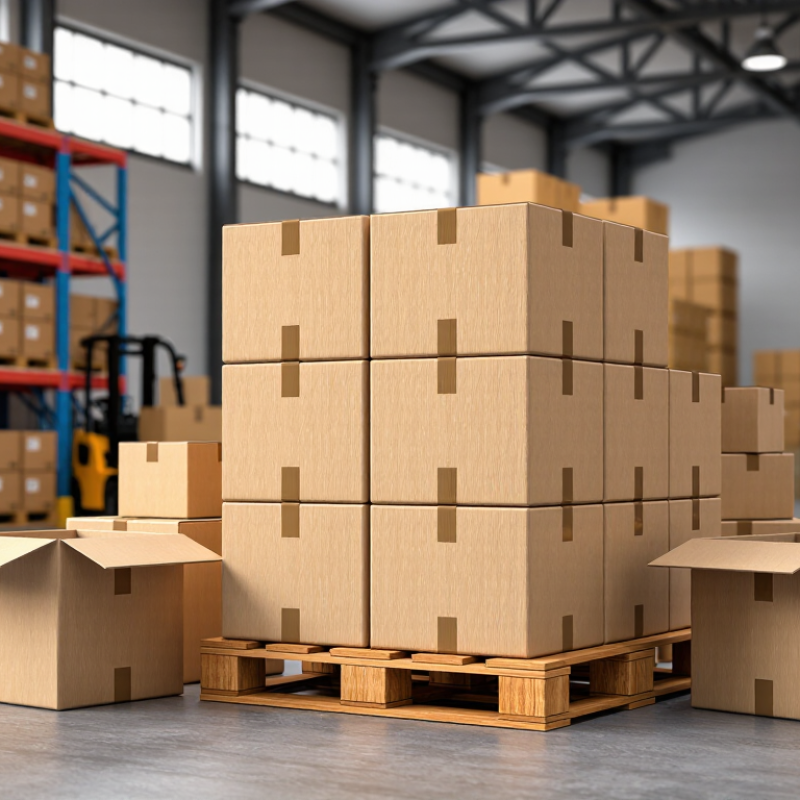
Brown Boxes are the familiar corrugated cartons used across warehouses, factories, retailers, and homes. Their kraft-paper surface looks plain, yet the structure is highly practical. Fluted paper cushions products during handling. The outer liner supports stacking. Standard sizes also simplify storage and shipping.
Global buyers often choose Brown Boxes because they balance cost, strength, and availability. A box can move from a local supplier to an international distribution center with little adjustment. Buyers can print handling marks, brand details, and recycling information directly onto the surface. This flexibility helps both large manufacturers and smaller online sellers.
Packaging expert Ruben Rausing once said, “A package should save more than it costs.” His words explain the continuing appeal of Brown Boxes. They protect goods while using relatively simple materials and familiar production methods. Their flat-packed design saves warehouse space before use. That detail matters when thousands of cartons wait on pallets.
Still, the brown appearance should not be mistaken for automatic sustainability. Responsible buyers must examine recycled content, fiber sourcing, coatings, transport distance, and local recycling systems. A recyclable box can still create unnecessary waste if it is oversized or poorly designed. This is where careful specification becomes important.
Brown Boxes are not glamorous.
They are dependable. Sometimes, dependable is exactly what global trade needs. Yet buyers should keep questioning the basics: Is the box strong enough? Is it too large? Can customers recycle it easily? These questions make a simple carton a more reliable packaging choice.
What Are Brown Boxes and Why Do Global Buyers Choose Them?
Brown boxes are shipping cartons commonly made from corrugated fiberboard. Their natural kraft-paper color usually comes from unbleached or lightly processed paper fibers. A typical carton has an outer liner, an inner liner, and a fluted middle layer. This structure creates space that helps absorb shocks during handling.
The basic characteristics are practical. Brown boxes are lightweight, stackable, and available in many sizes. They can use single-wall or double-wall construction, depending on the product’s weight and travel distance. Small ventilation gaps are not standard features and may weaken protection. Most cartons also accept labels, stamps, and simple printed handling instructions.
In warehouse inspections, buyers often check the box before checking the product. They look for crushed corners, uneven seams, and soft areas caused by moisture. A clean carton suggests better storage control, but appearance alone proves little. A brown box can look strong and still fail under heavy stacking. That assumption needs checking. Buyers should confirm board strength, internal dimensions, closure method, and packing performance with suppliers. Recycled fiber may reduce material impact, though its strength can vary by grade and moisture exposure. This is where specifications matter more than color. Simple, but not careless.
Brown boxes are shipping containers made mainly from unbleached kraft paper and corrugated fiberboard. Their brown color usually comes from natural kraft fibers, while the fluted inner layer provides cushioning and stacking strength.
How to read the chart: Corrugated flute profiles determine the typical thickness and protective performance of a brown box. Thicker profiles generally provide greater cushioning and stacking strength, while thinner profiles reduce material use and package weight. Values shown are representative industry specifications and may vary by paper grade and manufacturing tolerance.
What Are Brown Boxes and Why Do Global Buyers Choose Them?
Brown boxes are usually made from kraft paper, recycled fiber, or both. Kraft liner provides strength around the outside. Fluted paper forms the inner structure. It acts like a small shock absorber.
The common corrugated structure includes two flat liners and one fluted medium. Heavier shipments may use double-wall or triple-wall board. Flute height affects compression, cushioning, and material use. FEFCO’s 2023 industry statistics recorded roughly 48 billion square metres of corrugated board production in Europe. That scale reflects strong demand for practical, fiber-based transport packaging. However, brown color does not prove recycled content. Buyers should request fiber composition and test records.
Manufacturing begins with paper conditioning, often near controlled humidity. The medium passes through heated rollers, creating regular waves. Adhesive bonds the flute to the liner. A converting line then cuts, creases, folds, and prints the sheet. Compression testing commonly follows recognized methods, including edge-crush and box-compression procedures. ASTM and TAPPI standards support more consistent evaluation across suppliers. Still, test results can change with humidity, stacking time, and pallet alignment. A box that survives a laboratory test may fail after a damp ocean journey. That is an uncomfortable detail.
Global buyers choose brown boxes because flat-packed cartons reduce storage volume and simplify handling. Their plain surface also supports easy labeling and flexible printing. Yet “simple” is not always optimized. Oversized boxes waste void-fill and freight space. Undersized boxes invite crushed corners. Experienced packaging engineers match board grade, flute profile, and dimensions to the product’s real distribution route.
What Are Brown Boxes and Why Do Global Buyers Choose Them?
Brown boxes are usually corrugated cartons made from kraft paper. Their plain surface supports clear labels, barcode stickers, and handling marks. In warehouses, standard sizes simplify packing, pallet stacking, and inventory planning. They are simple. That simplicity reduces visual distractions and often lowers packaging costs.
Online retailers use brown boxes for clothing, books, household goods, and small equipment. Electronics suppliers add foam inserts, molded pulp, or air cushions inside. Apparel shipments may need only folded garments and a paper invoice. Food businesses can use them for sealed, non-direct-contact products, when the packaging meets applicable safety requirements. Automotive suppliers pack bolts, filters, and replacement parts in reinforced cartons. A 40-centimeter box can fit neatly on a pallet and reduce unused space. Small details matter.
Across global supply chains, brown boxes move through factories, fulfillment centers, trucks, and distribution hubs. Their flat panels provide room for destination labels and inspection information. Double-wall versions handle heavier loads and longer transport routes. Moisture remains a weakness, especially in humid storage areas. Protective liners or stretch wrapping may help, but they add material and labor. Boxes with oil stains, excessive tape, or mixed materials may be harder to recycle. Brown cartons are not flawless. Buyers should test compression strength, closure methods, and dimensions before ordering large quantities. A practical trial often reveals problems that a specification sheet misses.
| Industry | Common Application | Typical Brown Box Format | Typical Material Specification | Indicative Box Size Range | Typical Contents | Supply Chain Advantages | Key Buying Considerations |
|---|---|---|---|---|---|---|---|
| E-commerce and Retail | Shipping individual orders from fulfillment centers to consumers | Regular slotted carton Self-locking or mailer-style box |
Single-wall corrugated board; commonly kraft liner with recycled fiber content | Approximately 150 × 100 × 75 mm to 600 × 400 × 400 mm | Clothing, household goods, books, accessories and small appliances | Lightweight protection, efficient palletization, easy labeling and broad availability | Right-size selection, compression strength, cushioning, dimensional-weight charges and return handling |
| Food and Beverage | Secondary packaging for dry, sealed or shelf-stable products | Regular slotted carton Partitioned carton |
Food-contact suitability depends on the inner pack; moisture-resistant coatings may be required for humid conditions | Approximately 250 × 180 × 120 mm to 600 × 400 × 300 mm | Canned goods, packaged snacks, bottled products and dry ingredients | Stackable geometry, economical case packing and compatibility with automated handling | Moisture exposure, product weight, odor transfer, hygiene requirements and pallet stability |
| Consumer Electronics | Outer shipping carton for boxed devices and accessories | Double-wall carton Die-cut protective carton |
Single-wall or double-wall corrugated board with molded pulp, foam or paper cushioning where needed | Approximately 200 × 150 × 100 mm to 700 × 500 × 400 mm | Monitors, peripherals, small devices, cables and replacement parts | Improved impact resistance, standardized storage and reduced reliance on plastic outer packaging | Shock protection, static-control requirements, internal fit, tamper evidence and product value |
| Automotive and Industrial Parts | Internal movement and export shipment of components | Heavy-duty double-wall carton Bulk bin or reinforced carton |
Double-wall or triple-wall corrugated board for heavier loads; edge protection may be added | Approximately 300 × 250 × 200 mm to 1,200 × 800 × 800 mm | Fasteners, castings, machine parts, filters and maintenance components | Good cube utilization, flat storage before use and compatibility with pallets and material-handling equipment | Load-bearing capacity, abrasion protection, oil exposure, reusable packaging needs and stacking height |
| Pharmaceuticals and Healthcare | Secondary distribution packaging for medicines and medical supplies | Die-cut carton Partitioned or tamper-evident shipping box |
Clean, consistent corrugated board; temperature-sensitive shipments may require insulated inner packaging | Approximately 200 × 150 × 100 mm to 600 × 400 × 400 mm | Medical consumables, diagnostic kits, packaged medicines and laboratory supplies | Traceable labeling surfaces, efficient handling and adaptable internal organization | Regulatory controls, cleanliness, temperature exposure, tamper evidence and lot identification |
| Apparel and Footwear | Flat-pack storage, wholesale shipment and direct-to-consumer delivery | Folding carton Mailer box or standard slotted carton |
Lightweight single-wall corrugated board; recycled kraft grades are widely used | Approximately 250 × 180 × 80 mm to 600 × 400 × 250 mm | Garments, shoes, bags and folded textile products | Low package weight, clean presentation, easy opening and efficient reverse logistics | Compression during parcel transport, moisture protection, printability and return convenience |
| Agriculture and Fresh Produce | Harvest collection, short-distance distribution and produce export | Ventilated corrugated box Waxed or moisture-resistant carton where appropriate |
Corrugated board with ventilation openings; moisture-resistant treatment may be used for chilled or humid environments | Approximately 300 × 200 × 100 mm to 600 × 400 × 300 mm | Fruit, vegetables, flowers and packaged agricultural products | Ventilation, relatively low weight and efficient stacking on standard pallets | Humidity, condensation, airflow, product pressure, food-safety requirements and recycling compatibility |
| Furniture and Home Goods | Protection of flat-packed or partially assembled products | Large-format double-wall carton Edge-protected carton |
Double-wall or triple-wall corrugated board combined with corner blocks, paper pads or molded pulp | Approximately 600 × 400 × 200 mm to 1,800 × 900 × 600 mm | Flat-pack furniture, lighting, kitchenware and home décor | Large printable surface, flat storage before assembly and reduced need for rigid outer crates | Panel flexing, puncture resistance, corner protection, oversize handling and delivery access |
| International Freight and Export | Unitizing goods for sea, air, rail and road transport | Export-grade corrugated case Pallet-overpack carton |
Heavy-duty corrugated board selected for expected transit duration, stacking and humidity exposure | Common pallet footprints include approximately 1,200 × 800 mm or 1,200 × 1,000 mm | Mixed commercial goods, spare parts, machinery accessories and wholesale shipments | Lower tare weight than many rigid alternatives, easy customization and efficient use of container space | Board strength after humidity exposure, pallet pattern, container loading, markings and customs handling |
| Recycling and Circular Supply Chains | Collection, sorting and redistribution of recyclable or reusable goods | Standard kraft corrugated box Reusable foldable carton |
Mostly paper-based corrugated board; designs may use recycled fiber and limited mixed-material components | Approximately 300 × 200 × 150 mm to 800 × 600 × 500 mm | Paper products, reusable components, donated goods and sorted materials | Widely recyclable, easy to flatten, low storage volume and suitable for repeated handling when reinforced | Fiber contamination, wet-strength requirements, closure durability and local recycling infrastructure |
| Indicative dimensions and material choices vary by product weight, distribution route, climate, stacking pattern and applicable regulations. Brown boxes generally refer to unbleached kraft or natural-color corrugated shipping cartons designed for practical protection, storage and transport. | |||||||
Brown boxes are plain corrugated cartons made from kraft-colored paper. Global buyers often choose them because shipping performance matters more than appearance. Their sturdy fluted layers protect products from pressure, vibration, and short drops during transport. Standard brown cartons are also easy to label, tape, stack, and store in busy warehouses.
Cost is another strong reason. Brown boxes usually need less printing and simple finishing, which can reduce packaging expenses. Their neutral appearance also suits many products and markets. Buyers can add clear handling labels, product details, and shipping information without visual clutter. In my experience, consistent box sizes make pallet planning easier and reduce wasted space. Still, a cheap carton is not always a smart choice. Weak edges, poor sealing, or incorrect sizing can cause damage.
Tips: Choose a box that leaves only a small space around the product. Use suitable cushioning for fragile items. Check the carton’s compression strength before large shipments. Keep test records from packing trials. This small step improves reliability.
Brown boxes are not perfect. Moisture can weaken them, and rough handling may crush corners. Buyers should consider weather, route length, stacking pressure, and warehouse conditions. A practical packaging review should include real drop tests, tape checks, and weight verification. These details help global buyers select brown boxes with more confidence, not just lower cost.
Brown boxes usually mean plain kraft corrugated cartons made for storage and shipping. Their simple appearance can hide important differences in strength, moisture resistance, and construction. Global buyers often choose them because they are practical, widely available, and easier to customize for different markets.
Selection should begin with product weight, dimensions, and transport conditions. A box carrying glass needs stronger board and protective inserts than one holding clothing. Check the edge crush test and burst strength, not only the printed thickness. Ask for samples. Measure twice.
A carton that survives a warehouse may fail after weeks in humid sea freight. I have seen buyers overlook this detail and pay for damaged goods later.
International sourcing also requires consistent specifications and clear quality records. Request material details, production tolerances, recycled content, and test reports from the supplier. Confirm whether the box can handle stacking, vibration, temperature changes, and short-term rain exposure.
Standard sizes may reduce cost, but unusual products can leave empty space inside. That space increases movement and damage.
Packaging marks should remain readable after handling, while labeling must match destination requirements. Requirements differ by country, so verify them with a qualified logistics or compliance professional.
Samples can reveal problems, but one sample cannot prove long-term consistency. Regular inspections may be necessary.
A brown box is usually a corrugated carton made from kraft-colored paper. It commonly has two liners and one fluted middle layer. That structure cushions products during handling.
They are lightweight, stackable, and usually economical. Their plain surfaces accept labels, barcodes, tape, and handling instructions. They are practical.
They can carry clothing, books, household goods, small equipment, and replacement parts. Fragile items may need foam, molded pulp, or air cushions inside. The box alone may not provide enough protection.
Choose a carton with only a small space around the product. Excess space allows movement during transport. Very tight packing can crush the contents. Measure internal dimensions carefully.
Single-wall cartons suit lighter products and shorter routes. Double-wall cartons provide more support for heavier loads and longer transportation. The correct choice depends on weight, stacking pressure, and handling conditions.
Not fully. Moisture can soften paper fibers and weaken carton strength. Humid warehouses require careful storage. Protective liners or stretch wrapping may help, but they add cost and material.
Check crushed corners, uneven seams, soft areas, closure quality, and board strength. Confirm internal dimensions and maximum packing weight. A clean appearance helps, but it proves little.
Run packing trials with realistic product weights. Include drop tests, tape checks, compression checks, and weight verification. Keep the results for later comparison. Paper specifications can miss practical problems.
No. Recycled fibers may reduce material impact, but strength varies by grade and moisture exposure. Excessive tape, oil stains, and mixed materials can complicate recycling. The better option depends on the whole packaging system.
Brown Boxes are practical shipping containers typically made from kraft paperboard, most often in a corrugated structure that combines a fluted inner layer with flat outer liners. Their natural brown color reflects the use of unbleached or lightly processed fibers, while their layered construction provides strength, cushioning, and stackability. Manufacturing generally involves forming paper fibers into sheets, creating the fluted medium, bonding the layers with adhesive, and cutting and folding the board into suitable box designs.
Across industries and supply chains, Brown Boxes are used for transporting, storing, and organizing a wide range of general goods. Global buyers often prefer them because they are lightweight, cost-efficient, easy to customize, recyclable, and compatible with common shipping systems. When selecting Brown Boxes internationally, buyers should consider product weight, dimensions, stacking requirements, moisture exposure, closure methods, printing needs, and transport conditions. Consistent quality, reliable production, efficient space usage, and appropriate packaging specifications can help reduce damage, shipping costs, and handling difficulties.

Doton Printing